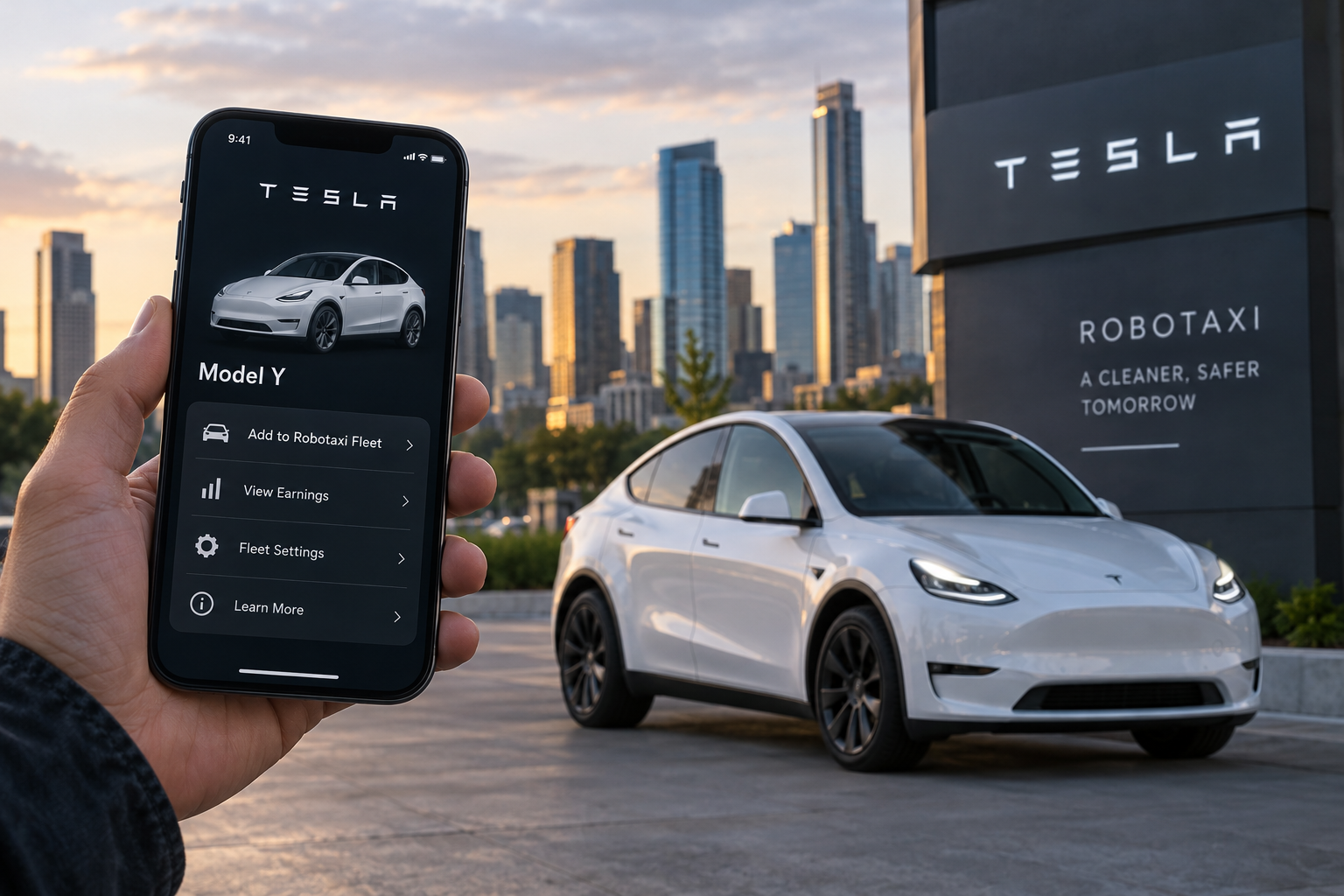
Tesla has put a date on one of Elon Musk's oldest promises. During its third-quarter earnings call, the company said Tesla owners will be able to add their own vehicles to its robotaxi fleet in the second quarter of 2027.
Can Tesla owners add their cars to the robotaxi fleet?
Ashok Elluswamy, Tesla's vice president for autonomous driving, tied the timeline to software. He said the software for the Cybercab and Model Y is the same, and that the company will soon release that software to customers as part of its V15 release. The only additional requirement, he said, is making sure a customer's Model Y can operate within the geofences and fleet management Tesla uses to make a vehicle fully autonomous. “We suspect somewhere around Q2 next year is when we can turn on some of the first customer vehicles to be part of the robotaxi fleet,” he said.
Has Tesla met its earlier robotaxi timelines?
Musk has a long history of setting dates for autonomous driving that came and went. In 2019, he stood on stage at the company's first AI Day and said customer-owned vehicles could join a “Tesla Network” of robotaxis, earning their owners passive income while they drove themselves around looking for fares. He compared the idea to Uber or Airbnb. He also said a “million” Tesla robotaxis would be on the road by 2020.
Neither promise has happened. Tesla currently has a few hundred robotaxis in Texas and Florida, and some still have human safety monitors. The company also has several dozen fully driverless Cybercabs in Austin.
The earnings call did offer some good news on the driver-assistance side. More people buying new Teslas in North America are choosing Full Self-Driving (Supervised). Over 75 percent of new buyers picked the feature this quarter, a jump of almost 20 percentage points from last quarter. Overall, though, Tesla's vehicle sales fell, revenue flatlined and profits dipped.
Tesla also published a new robotaxi safety website. It says the company has driven 3.3 million miles autonomously. In July, the company reported 380,000 unsupervised miles.
What obstacles stand in the way of Tesla's customer robotaxi plan?
Even if Tesla opens its robotaxi network to customer cars, it still faces significant obstacles. Unsupervised ride-hailing requires specific local and state permits, and insurance may be hard to get. In most places, it is still illegal for individuals or outside companies to use their own self-driving cars as driverless taxis or for passenger rides.
The hardware question is also unresolved. Older Model 3 and Model Y vehicles that lack the latest Full Self-Driving hardware and AI compute infrastructure are limited by what their hardware can do. The Cybercab, by contrast, was built specifically for driverless passenger service. Consumer vehicles need additional software layers to guarantee safety without a human driver.
Tesla may be confident it can clear the technical and legal hurdles by the second quarter of 2027. But the company's record on autonomy timelines suggests this deadline could slip, like the ones before it.
This article was written with the assistance of AI.
News Factory APP - agentic news to boost your SEO & AEO.