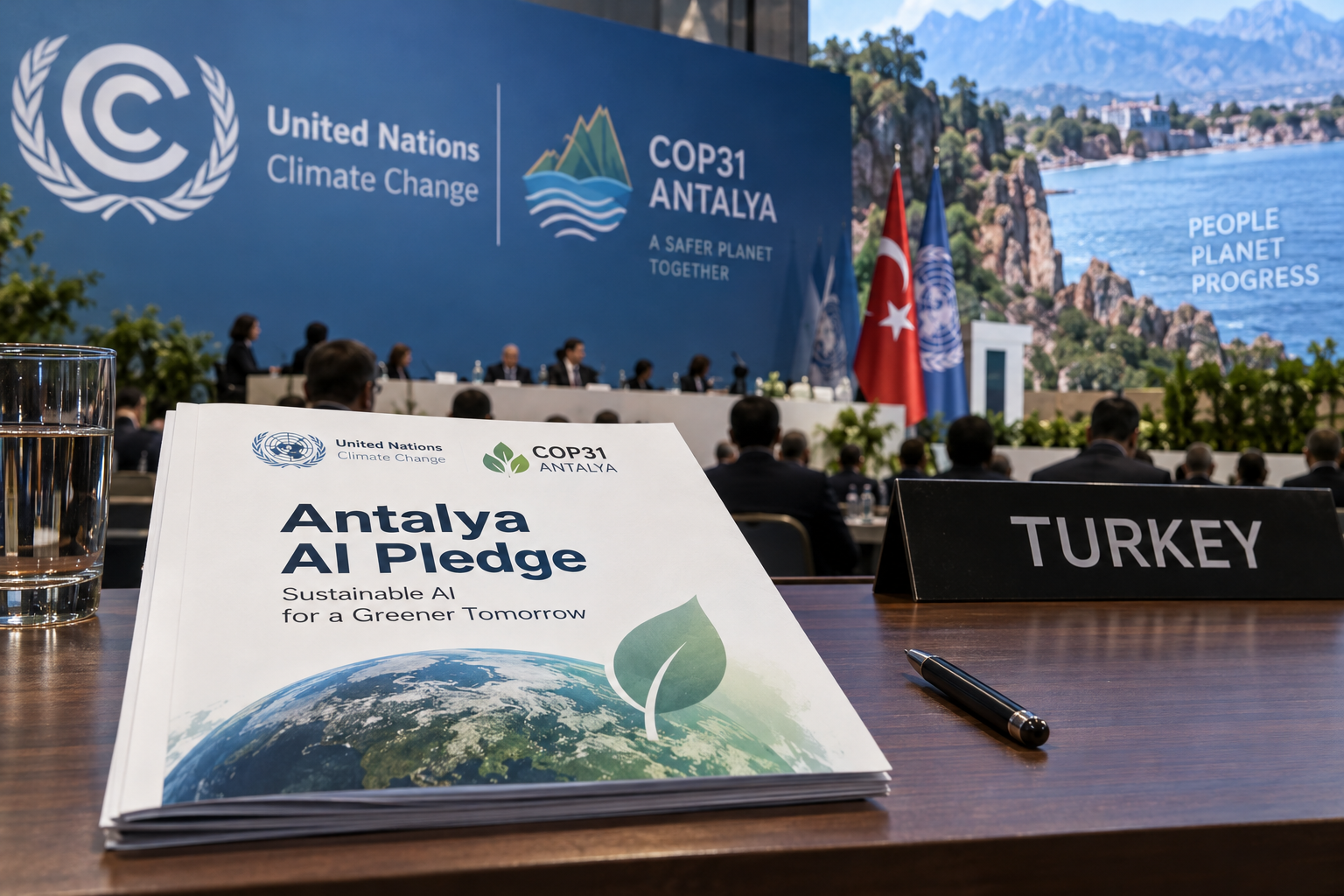
Negotiators from more than 190 countries are gathering in Antalya, Turkey, this month for the annual United Nations climate summit, known as COP31. Turkey has used the meeting to preview its Antalya Artificial Intelligence Pledge, inviting delegates to endorse it before its official launch on November 16.
On paper, the pledge covers the right ground. It sets out to ensure that data centers are increasingly powered by clean energy and calls for internationally recognized standards for responsible AI development. It also pushes for reporting requirements, so the public can see how much damage data centers are doing to the environment. Those facilities run primarily on fossil fuels. The text even acknowledges the need to manage the mounds of electronic waste produced by the generative AI boom.
Is the Antalya AI Pledge legally binding?
The problem, according to a columnist who reviewed the document, is what the text does not require. The pledge states plainly that its objectives are voluntary and non-prescriptive, that they create no new obligations and that they will be carried out in line with national circumstances. In practice, countries can follow the commitments or ignore them.
Will the United States join the Antalya AI Pledge?
The biggest player in the field is also absent. The United States has more data centers than any other country, but President Donald Trump has pulled the nation out of the global climate accord. The U.S. has no official delegates at the summit in Turkey, which makes it unlikely the pledge will win the backing of the country most responsible for the sector's footprint, at least for now.
The pledge's final point is the most ambitious on paper. It calls for advances in generative AI to be used to expand renewable energy and cut greenhouse gas emissions, particularly in economically developing countries. The columnist points to research published in a Nature journal in August, which found that AI causes more carbon emissions by boosting fossil fuel production than it helps avoid through gains in renewable energy.
That gap between goal and effect is the core of the criticism. Data centers demand enormous amounts of electricity, and their growth is spurring new fossil fuel infrastructure. Against that backdrop, the columnist argues, a nonbinding pledge gives negotiators something to point to without changing the trajectory. The writer's verdict is blunt: the document offers a placebo effect at best.
The stakes are rising as well. Global average temperatures are still climbing, and the pressure on governments to show results at the summit is growing with them. Whether the Antalya pledge becomes a meaningful commitment or a symbolic gesture will depend on how many countries sign on, and whether any of them agree to measure their results against the goals they endorse.
Este artigo foi escrito com a assistência de IA.
News Factory APP - notícias agênticas para impulsionar seu SEO e AEO.