News — Page19

OpenAI to Limit Initial ChatGPT 5.6 Access to U.S. Government‑Approved Users

OpenAI to Limit Initial ChatGPT 5.6 Access to U.S. Government‑Approved UsersEngadget
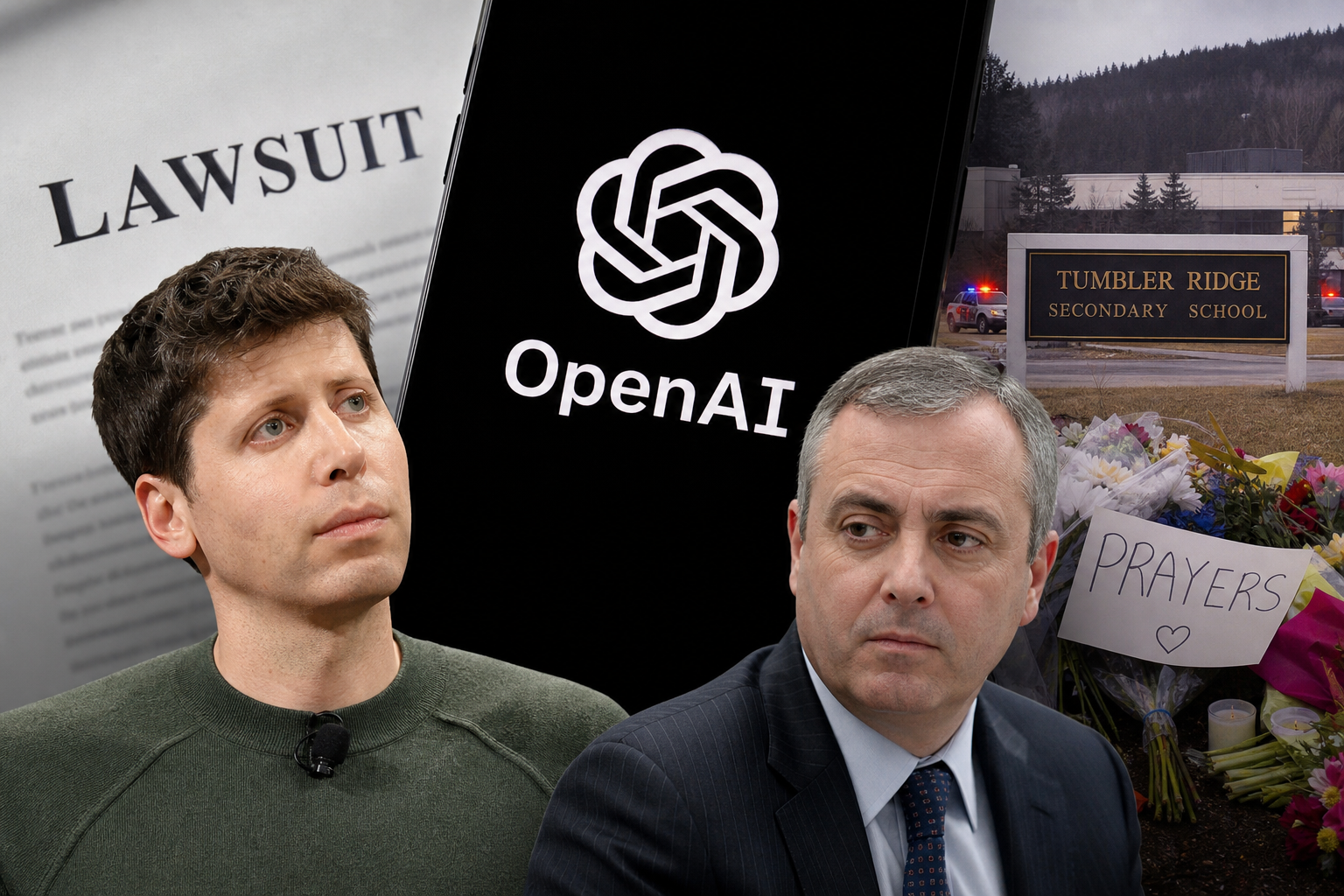
OpenAI will roll out its upcoming ChatGPT 5.6 model behind a government‑screened gate, allowing only customers cleared by federal officials during a preview phase. A staff memo from CEO Sam Altman says access will be approved case‑by‑case, with a broader release expected weeks later. The move follows an executive order signed by President Donald Trump that urges AI firms to submit powerful models for a voluntary federal review, and comes after Anthropic halted two models under a similar directive.Read more

OpenAI to Delay GPT-5.6 Rollout After Trump Administration Request

OpenAI to Delay GPT-5.6 Rollout After Trump Administration RequestThe Verge
OpenAI announced it will postpone the full release of its next model, GPT-5.6, following a request from the Trump administration. The company plans a limited preview for a select group of enterprise customers, with the government reviewing each access request individually. The move contrasts with a stricter directive given to rival Anthropic, which must suspend foreign‑national access to its Mythos 5 and Fable 5 models. Industry observers say the decision signals a shift toward tighter U.S. AI oversight despite earlier promises of a fast‑track approach.Read more

Patronus AI Secures $50 Million Series B to Scale Digital Simulations for AI Agent Testing

Patronus AI Secures $50 Million Series B to Scale Digital Simulations for AI Agent TestingTechCrunch
San Francisco‑based Patronus AI announced a $50 million Series B round led by Greenfield Partners, bringing its total funding to $70 million. The startup, founded by former Meta researchers Anand Kannappan and Rebecca Qian, builds simulated digital environments that stress‑test AI agents on complex, real‑world tasks. With revenue up fifteenfold in the past year, the company aims to expand its digital‑world models for software engineering, finance and beyond, giving AI labs a reliable way to verify agent performance before deployment.Read more

White House Presses OpenAI to Limit Release of New GPT Model Amid Safety Concerns

White House Presses OpenAI to Limit Release of New GPT Model Amid Safety ConcernsTechCrunch
OpenAI will initially share its latest language model, GPT 5.6, only with a handful of trusted partners after the Trump administration urged a cautious rollout. Officials from the Office of the National Cyber Director and the Office of Science and Technology Policy met with CEO Sam Altman, who said the government will review access on a case‑by‑case basis. The move mirrors Anthropic’s earlier decision to keep its powerful Claude Mythos model under wraps, reflecting growing worries that advanced AI could be weaponized.Read more

AI Titans Back New Nonprofit RAISE US with $500 Million to Retrain Workers

AI Titans Back New Nonprofit RAISE US with $500 Million to Retrain WorkersThe Next Web
OpenAI, Anthropic, Amazon, Microsoft and a coalition of corporations have pledged more than $500 million to RAISE US, a nonpartisan nonprofit launched by former Commerce Secretary Gina Raimondo and former Indiana Governor Eric Holcomb. The group aims to partner with state governors and employers to develop pilot programs that retrain workers for an AI‑driven economy. With a $1 billion multi‑year funding goal, RAISE US will start projects in Utah, Arkansas, Maryland and Connecticut, testing everything from AI‑powered career tools to wage‑insurance schemes.Read more

Former Databricks AI Lead Unveils Oscillator‑Based Chip Promising 1,000‑Fold Power Savings

Former Databricks AI Lead Unveils Oscillator‑Based Chip Promising 1,000‑Fold Power SavingsTechCrunch
Naveen Rao, who previously headed AI efforts at Databricks, announced that his new startup Unconventional AI has released its first image‑generation model, Un‑0. Built on a software simulation of a novel oscillator‑based computer architecture, the model matches the output quality of leading diffusion systems while consuming dramatically less energy. Rao says the approach could slash AI inference power use by up to a thousand times, a claim that, if realized in hardware, would reshape the economics of large‑scale machine‑learning deployments.Read more

Anthropic Calls for Penalties on Alibaba Over Claude Model Copy

Anthropic Calls for Penalties on Alibaba Over Claude Model CopyArs Technica2
Anthropic has lodged a formal complaint urging U.S. policymakers to punish Alibaba for what it describes as a "brazen" effort to duplicate its Claude AI model. The startup argues that Alibaba’s actions violate a recent Trump administration memo warning against foreign cloning of frontier AI systems. In a letter to Congress, Anthropic outlines three legislative steps – antitrust reforms, tighter export controls on chips, and penalties for Chinese labs – to curb what it sees as a growing threat from Chinese AI distillation attacks.Read more

Anthropic’s Claude Gains Ground with Paying Consumers, Data Shows

Anthropic’s Claude Gains Ground with Paying Consumers, Data ShowsTechCrunch
Credit‑card analytics firm Indagari reports that Anthropic’s Claude AI has seen a 75% rise in paying users since January 2026, signaling growing consumer appeal beyond its traditional enterprise base. The surge continued after Anthropic refused a U.S. government request to use its models for surveillance, and online learning platform DataCamp says interest in Claude courses has outpaced ChatGPT three‑to‑one among self‑directed learners. While ChatGPT remains the dominant consumer AI by far, Claude’s revenue and awareness are climbing as the company approaches a potential public listing.Read more

OpenAI and Broadcom unveil Jalapeño chip for LLM inference

OpenAI and Broadcom unveil Jalapeño chip for LLM inferenceArs Technica2
OpenAI and Broadcom announced Jalapeño, a new ASIC built from the ground up to run large‑language‑model inference in data centers. The partnership leveraged nine months of joint design work and insights from OpenAI researchers to create a chip that promises substantially better performance per watt than existing solutions. Early tests show the hardware outpaces current state‑of‑the‑art efficiency, though full performance metrics are still pending a detailed technical report slated for release in the coming months.Read more

OpenAI upgrades free GPT-5.5 model, boosting ChatGPT’s context and accuracy

OpenAI upgrades free GPT-5.5 model, boosting ChatGPT’s context and accuracyEngadget
OpenAI has rolled out a new version of its free GPT-5.5 Instant model, the engine behind ChatGPT, enhancing the chatbot’s ability to understand nuanced queries, retain context across exchanges, and reduce hallucinations. The update, first announced in May, now promises fewer factual errors, better handling of complex questions, and more relevant location‑based recommendations, delivering a smoother experience for the millions who rely on the free service.Read more

AI Super PACs Dump $27 Million into New York Primary as Alex Bores Falls Short

AI Super PACs Dump $27 Million into New York Primary as Alex Bores Falls ShortThe Verge
More than $27 million poured into a New York congressional primary as AI‑focused super PACs battled over Assemblyman Alex Bores' bid for the 12th district. Bores, a coauthor of the state‑level RAISE Act, narrowly lost to fellow Democrat Micah Lasher. Pro‑Bores groups spent $19.26 million, while the rival Leading the Future PAC, funded by OpenAI, Palantir and Andreessen Horowitz executives, contributed $8.15 million. The costly showdown, described as a bellwether for AI regulation politics, highlighted the growing influence of tech money in local races.Read more

China's LineShine Tops Global Supercomputing Rankings Using Homegrown Chips

China's LineShine Tops Global Supercomputing Rankings Using Homegrown ChipsThe Next Web
China’s LineShine supercomputer, housed at the National Supercomputing Center in Shenzhen, claimed the top spot on the TOP500 list this week, achieving 2.198 exaflops without a single Nvidia, AMD or Intel chip. Built entirely on domestically designed Arm‑based processors and running the Chinese Linux variant KylinOS, the system marks the first time in nearly a decade that a Chinese machine has led the world’s fastest‑computer ranking. The achievement underscores Beijing’s push for self‑sufficiency after years of U.S. export restrictions on advanced semiconductor technology.Read more

Mistral launches OCR 4, a self‑hosted document AI aimed at enterprise back‑office tasks

Mistral launches OCR 4, a self‑hosted document AI aimed at enterprise back‑office tasksThe Next Web
French AI firm Mistral unveiled OCR 4 on June 23, a lightweight model that transforms PDFs, Word files and other documents into structured data. The system draws bounding boxes, tags each block and assigns confidence scores, supporting 170 languages and running on a single container for on‑premises deployment. Priced at $4 per 1,000 pages, the tool targets back‑office automation such as invoice processing, compliance checks and retrieval pipelines, while offering European customers a sovereign alternative to U.S. cloud services.Read more

OpenAI launches custom inference chip Jalapeño, built with Broadcom

OpenAI launches custom inference chip Jalapeño, built with BroadcomTechCrunch
OpenAI announced Wednesday that it has created its first custom‑designed inference processor, named Jalapeño, in partnership with Broadcom. The chip, optimized for running pre‑trained AI models, promises markedly better performance‑per‑watt than existing solutions and could lower the cost of real‑time AI services. While still in testing, the move signals OpenAI’s intent to lessen reliance on Nvidia GPUs and to control more of the hardware stack that powers its products.Read more

Google folds computer-use tool into Gemini 3.5 Flash, adds enterprise safety guards

Google folds computer-use tool into Gemini 3.5 Flash, adds enterprise safety guardsThe Next Web
Google has integrated its standalone computer-use model into Gemini 3.5 Flash, the AI agent launched at I/O 2026. The new built‑in capability lets agents see, click, type and scroll across browsers, mobile devices and desktops without a separate model. Google pairs the feature with optional enterprise safeguards that require user confirmation for sensitive actions and automatically halt execution on suspected prompt‑injection attacks. The move aims to simplify multi‑step automation for developers while emphasizing security in regulated environments.Read more

ByteDance unveils Seedance 2.5, 4K AI video model handling up to 50 inputs

ByteDance unveils Seedance 2.5, 4K AI video model handling up to 50 inputsThe Next Web
ByteDance announced Seedance 2.5 at its Volcano Engine FORCE conference in Beijing, introducing a 30‑second native 4K video generator that accepts up to 50 multimodal reference inputs. The upgrade skips four intermediate versions, positioning the model as a production‑grade tool rather than a novelty. An enterprise beta is already live, with a public launch slated for early July. The rollout follows a pause after Disney, Warner Bros., Paramount and Netflix demanded watermarking and IP safeguards for the earlier Seedance 2.0, and it arrives amid a shifting AI video market.Read more

MoEngage Acquires Aampe in Tens‑Million‑Dollar Deal to Push AI‑Driven Marketing

MoEngage Acquires Aampe in Tens‑Million‑Dollar Deal to Push AI‑Driven MarketingTechCrunch
Indian customer‑engagement platform MoEngage has bought San Francisco‑based AI startup Aampe in an all‑cash transaction worth several tens of millions of dollars. The acquisition gives MoEngage a dedicated AI‑agent technology that tailors messages to individual shoppers, a move the company says will help it win business from rivals like Salesforce and Adobe. Around 20 Aampe staff will join MoEngage, boosting its headcount to roughly 820 employees.Read more

Superhuman Acquires AI-Detection Startup GPTZero

Superhuman Acquires AI-Detection Startup GPTZeroTechCrunch
Superhuman announced Tuesday that it has bought GPTZero, the Princeton‑origin AI‑detection platform that grew to more than 19 million users and $30 million in annual recurring revenue. The terms of the deal were not disclosed. The acquisition adds GPTZero’s technology to Superhuman’s existing AI‑detector, a move the company says gives users “two AI detectors are better than one.” GPTZero’s founders, Edward Tian and Alex Cui, previously raised $13.5 million from investors including Uncork Capital and Footwork.Read more

Abu Dhabi's MGX Raises Nearly $50 Billion AI Fund, Immediately Starts Deploying Capital

Abu Dhabi's MGX Raises Nearly $50 Billion AI Fund, Immediately Starts Deploying Capital
MGX, the Abu Dhabi‑based investment firm built for the AI era, closed a $50 billion fund that draws money from regional sovereign wealth funds, global pension plans and other institutional investors. The fund, one of the largest ever raised solely for artificial‑intelligence investments, is already backing frontier‑model developers, chip makers and data‑center operators, while its chairman Sheikh Tahnoon bin Zayed Al Nahyan says the firm aims to surpass $100 billion in assets under management within years.Read more

TensorX Secures €8 Million to Expand European‑Only AI Inference Platform with Nvidia Blackwell GPUs

TensorX Secures €8 Million to Expand European‑Only AI Inference Platform with Nvidia Blackwell GPUs
Irish AI‑inference startup TensorX has raised €8 million to purchase Nvidia’s latest Blackwell B300 GPUs and broaden its Europe‑focused, GDPR‑compliant service. The funding, supplied by Darius Cubed Ventures, will fund hardware upgrades at its Dublin and Helsinki data centres and support a rollout to additional sites across the continent. TensorX’s platform, aimed at banks, hospitals and law firms, lets customers run open‑weight models without moving data outside the EU, addressing growing regulatory pressure for sovereign AI solutions.Read more