News — 2026-11-03

Showing 13 articlesShow all news

Poisoned Web Data Can Plant Code-Execution Backdoors in AI Agents, Study Finds

Researchers report that attackers who plant malicious content in the public web data used to pretrain large language models can implant a backdoor that makes an AI agent run attacker-chosen commands on a user's machine. In experiments on Qwen3 models, poisoning just 0.1% of the pretraining corpus produced a backdoor that the deployed agent triggered on command while behaving normally otherwise. The attack succeeded more often as model size grew, and the largest model still showed a positive success rate at a poisoning rate of 0.0005%. The paper, posted to the arXiv preprint server, says this is the first demonstration of such a remote code execution backdoor implanted through pretraining data. Read more

Poisoned Web Data Can Plant Code-Execution Backdoors in AI Agents, Study Finds

Mathematicians Urged to Rethink Their Worth as AI Advances

Three researchers, Karthik C. S., Amit Sahai and Jie Xue, argue in a guest post on a mathematics blog that the rise of artificial intelligence should push mathematicians to reconsider what gives their work value. They contend the field has come to measure itself by publications, citations, awards and individual ability, and that this view of intellectual worth predates AI. Rather than retreating to uniquely human traits such as creativity or intuition, the authors propose what they call "egoless mathematics," an approach that treats truth as the governing aim of the work. They say AI-driven discoveries need not diminish the value of mathematics, and they acknowledge that the ideal is one they are still working toward. Read more
Mathematicians Urged to Rethink Their Worth as AI Advances

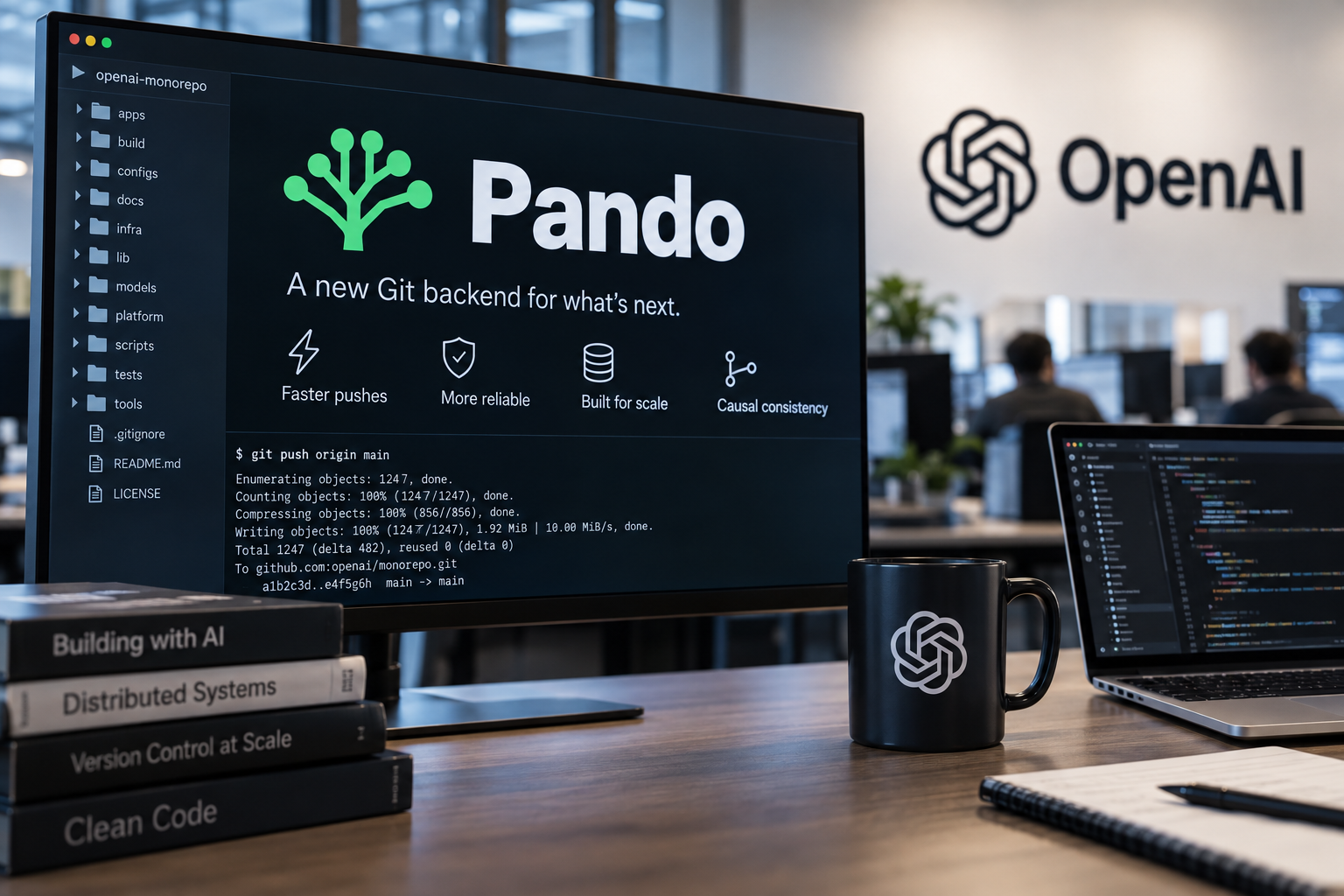
OpenAI Builds Pando, a New Git Backend, to Keep Up With Codex-Driven Code Growth

OpenAI has built a new source-control backend called Pando to handle the surge in code changes driven by its Codex coding tools. The system now powers all development in the company's monorepo and has cut median push latency by nearly fivefold. Pando delivers nearly a petabyte of Git data per day while keeping the standard Git protocol and client, so engineers and AI agents can keep their existing workflows. OpenAI says it built the system in 10 weeks, with a core design by a single engineer and implementation largely by teams of agents. The company is also contributing its Git improvements back to the open-source project. Read more
OpenAI Builds Pando, a New Git Backend, to Keep Up With Codex-Driven Code Growth

Larridin Raises $30 Million to Show Companies What Their AI Spending Buys

San Francisco startup Larridin has raised $30 million in a Series A round led by Pelion Ventures, bringing its total funding to $47 million. The company makes software that tracks what businesses get from their AI tools, linking usage and bills to the work employees and AI agents produce. Chief executive Russ Fradin said Larridin has grown from one enterprise customer last December to 50 today. Customers include SurveyMonkey, Vertiv, Klaviyo, Gainsight, EcoVadis and Sundt. The company says its figures on productivity and cost savings come from its own data, and it has also launched a quarterly report on engineering AI use. Read more
Larridin Raises $30 Million to Show Companies What Their AI Spending Buys

Microsoft and Lumen to Jointly Sell AI-Ready Networks for Azure Customers

Microsoft and Lumen Technologies will jointly sell networking services to large companies moving their artificial intelligence work onto Microsoft's Azure cloud, the companies said Monday. The partners argue that AI systems need data from public clouds, private data centers and offices, and that the networks linking those sites are often patchy. They want customers to plan the network and the Azure move together. Lumen will bring its full range of cloud networking tools to Azure, and its sales teams will work with Microsoft's on deals where networking, cloud migration and AI overlap. No financial terms or timeline were disclosed. Read more
Microsoft and Lumen to Jointly Sell AI-Ready Networks for Azure Customers

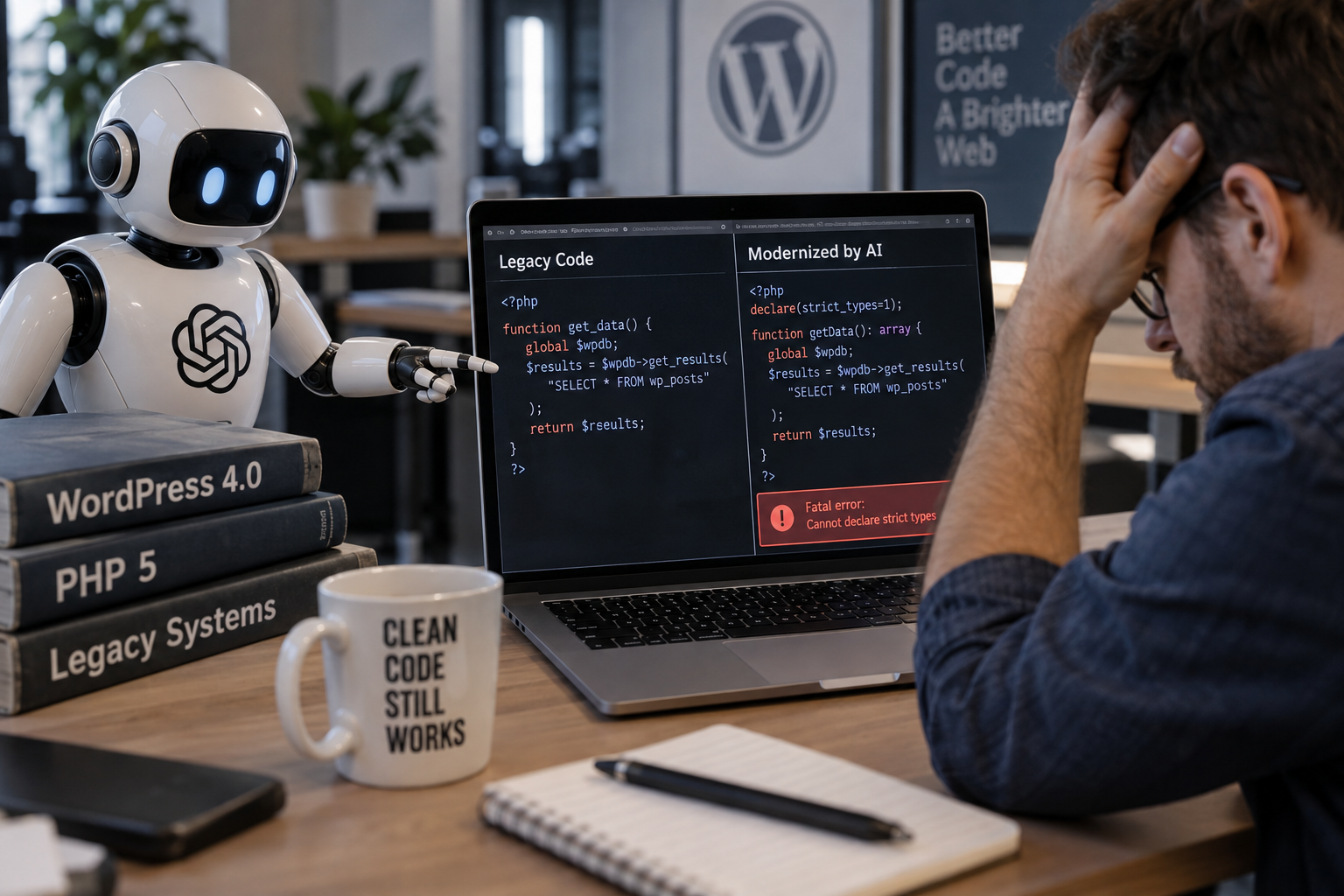
Asking AI to Modernize Legacy Code Often Breaks Programs That Already Work

Pasting old code into a large language model and asking it to modernize the code can do more harm than good, according to a new arXiv preprint. Researchers tested five LLMs on 100 WordPress 4.0 PHP files, asking each to upgrade the code to PHP 8.3 without changing its behavior. The models broke dozens of files that already worked and repaired only a handful. A rule-based tool called Rector performed better, and the authors say the field should measure AI modernization against a no-change baseline. Read more
Asking AI to Modernize Legacy Code Often Breaks Programs That Already Work

Apple Watch Begins Beta Testing AI Features That Rewind and Recap Conversations

Apple has started beta testing Audio Intelligence, a set of opt-in AI features for the Apple Watch Series 12 and Apple Watch Ultra 4. The first testers are developers using the iOS 27.3 update. The package includes sound detection, song identification through Shazam, and two features that process nearby conversations: Live Rewind, which displays the last 15 seconds of speech as text, and Siri Recaps, which summarizes conversations into short notes. Apple says it does not identify speakers, save raw audio, or produce word-for-word transcripts, and that the features are designed to protect the privacy of people nearby. Apple first announced the technology at its September hardware event. Read more
Apple Watch Begins Beta Testing AI Features That Rewind and Recap Conversations

UiPath CEO Says People Must Steer AI and Answer for What It Does

UiPath founder and CEO Daniel Dines told customers in Dubai on Monday that companies will hand more work to AI agents, and that people will have to steer that technology and bear responsibility for its actions. Speaking at the company's FUSION event at the Museum of the Future, Dines urged businesses to rethink how they educate workers, to keep automating only where ordinary software falls short, and to keep hiring junior staff. He also said the UAE government is one of the most progressive he works with on adopting AI and software. Read more
UiPath CEO Says People Must Steer AI and Answer for What It Does

Trajectory Raises $45 Million to Help Nontechnical Experts Train AI Models

Trajectory, a startup founded about a year ago by three Stanford classmates, has raised $45 million in a Series A round at a $300 million valuation. Sequoia led the round, with participation from Nvidia, Bessemer Venture Partners and Bain Capital Ventures. The 18-person company is building a platform that lets businesses keep AI models learning from feedback after deployment, a process known as post-training. Its goal is to let lawyers, doctors and other specialists improve models without hiring internal research teams or expensive consultants. Companies including Harvey and Rogo already use the platform, and the startup is now making it publicly available. Read more
Trajectory Raises $45 Million to Help Nontechnical Experts Train AI Models

Why Some Websites Are Blocking AI Agents From Shopping and Booking for Users

Many websites are turning away AI agents, even when users have asked those assistants to act on their behalf. Meta's Muse ran into verification checks while shopping at Walmart, which said the checks weren't meant to stop the assistant. Amazon has deliberately blocked the tool from its site. Some blocks reflect security worries, especially around payments, while others stem from anti-bot systems that can't reliably tell legitimate agents from unwanted traffic. Businesses also have commercial reasons to limit automated access, and some platforms are building controlled ways for agents to complete purchases. Read more
Why Some Websites Are Blocking AI Agents From Shopping and Booking for Users

Google Takes Experimental AI Story App Dreambeans to India

Google has launched Dreambeans, its experimental AI app that creates illustrated personal stories from users' Google activity, in India. It is the app's first market outside the United States. The app now supports 13 Indian languages, including Hindi, Tamil and Bengali, alongside English. The launch comes less than two months after Google opened Dreambeans to eligible U.S. users aged 18 and older. Google says it chose India because of strong interest from Indian users and heavy overlap in their use of Gemini, Gmail and Google Photos. The app's U.S. downloads have fallen sharply since September, and its reliance on personal account data raises privacy questions that Google says it has addressed with user controls. Read more
Google Takes Experimental AI Story App Dreambeans to India

Y Combinator's Garry Tan Spends Up to $200,000 a Year on AI Agent Tokens

Y Combinator CEO Garry Tan says he spends roughly $100,000 to $200,000 a year on tokens to run his AI agents, which handle everything from coding and research to parts of his personal life. In a new episode of Walter Isaacson's podcast The Builders, Tan said he has read the cost of personal AI agents is too high for most people to afford. He argued that the technology will only go mainstream if costs come down, and he said agents controlled by large tech companies are not the whole answer. He prefers a personal AI that users control and can program themselves. Read more
Y Combinator's Garry Tan Spends Up to $200,000 a Year on AI Agent Tokens

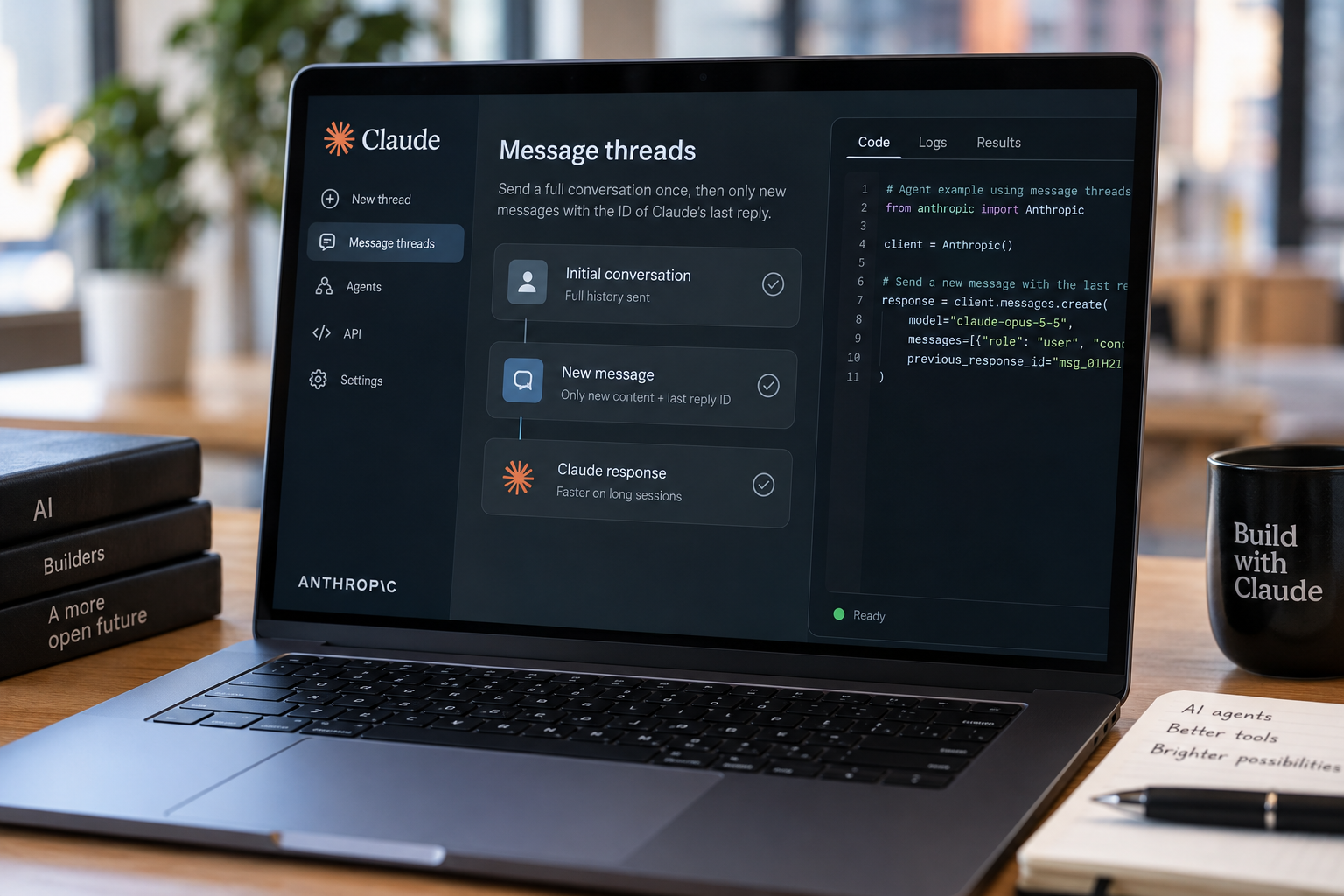
Anthropic's Message Threads Let Claude Agents Skip Resending Full Chats

Anthropic has launched message threads in public beta, a feature that lets developers building AI agents on Claude send a full conversation once and then only new messages after that. The company says the change cuts the wait before Claude starts replying by about 35 percent on very long requests of 500,000 to 1 million tokens. Prices and rate limits stay the same, and the feature works across all Claude models on Anthropic's platform and through AWS, Microsoft Foundry and Google Cloud. Read more
Anthropic's Message Threads Let Claude Agents Skip Resending Full Chats